

Depplo Team | World News Desk
A Market That Refuses to Slow Down
If you had told a privacy analyst a decade ago that virtual private networks would evolve from a niche tool used by IT departments and torrenting enthusiasts into a mainstream consumer product advertised during prime-time television and sponsored by podcast hosts, they might have laughed. Yet here we are in 2026, and the VPN industry is one of the fastest-growing corners of the broader cybersecurity and privacy technology sector.
The reasons are not mysterious. A decade of high-profile data breaches, an explosion in remote and hybrid work, rising awareness of ISP data collection practices, and a steady drumbeat of government surveillance stories have combined to push ordinary internet users toward tools that were once considered the domain of specialists. What used to be a “nice to have” for the security-conscious has, for millions of households, become as routine as installing antivirus software or setting up a password manager.
This shift has not gone unnoticed by investors, and it has not gone unnoticed by the companies competing for a slice of the pie. The result is a market defined by two seemingly contradictory forces at once: explosive growth in new users, and an accelerating wave of consolidation among providers.
Consolidation: Fewer Owners, More Brands
One of the more interesting dynamics of the past several years has been the steady concentration of ownership within the VPN space. Several well-known consumer brands that appear to compete fiercely with one another on comparison sites are, in fact, owned by the same parent holding companies. This is not necessarily sinister — it is a familiar pattern in mature consumer technology markets, similar to what happened decades ago in razors, soft drinks, and airlines. A handful of larger holding groups now control a disproportionate share of the “top 10” lists that dominate search results and review sites.
For consumers, this consolidation cuts both ways. On one hand, shared infrastructure investment can mean faster server rollouts, better engineering resources, and more consistent security audits across brands under the same umbrella. On the other hand, less genuine competition can mean slower innovation in pricing and features, and it raises legitimate questions about whether the “compare five VPNs and pick the best one” experience many users think they are having is really as independent as it appears.
Depplo’s advice to readers remains consistent: look past the marketing layer. Investigate who actually owns a VPN provider, where the company is legally headquartered (and therefore which laws and data-retention obligations govern it), and whether it has published independent, third-party security audits within the last twelve months. A slick user interface says very little about what happens to your traffic on the back end.
Why Demand Keeps Climbing
Several converging trends explain why VPN adoption keeps setting new records year after year:
- Remote and hybrid work is now permanent. Millions of employees regularly connect to corporate resources from home networks, co-working spaces, cafes, and airport lounges. Corporate IT departments increasingly mandate VPN use as a baseline security control, and many employees continue using similar habits in their personal lives.
- Streaming fragmentation. As more services carve up content libraries by region and platform, users are increasingly turning to VPNs simply to access content they have already paid for while traveling, or to compare pricing across regions.
- Public Wi-Fi awareness. Coffee shops, airports, and hotels remain common venues for basic network snooping. Years of security journalism covering the risks of unencrypted public networks have pushed casual users toward always-on VPN habits.
- Regulatory and censorship pressure. In a number of countries, tightening restrictions on specific apps, platforms, or entire categories of content have made VPNs a practical necessity rather than a convenience, a trend we cover in depth elsewhere on Depplo this week.
- Mobile-first privacy habits. A new generation of users, raised on smartphones rather than desktops, treats privacy tools as a normal part of the app ecosystem rather than a specialist purchase — similar to how ad blockers or password managers are now considered standard.
The Pricing Squeeze
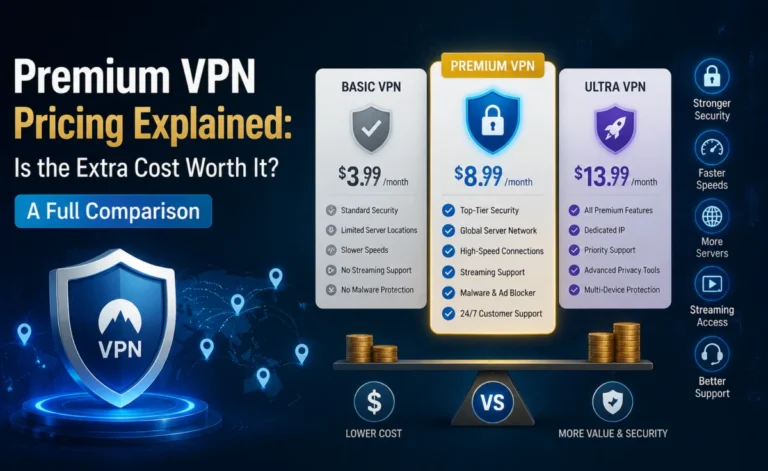
Increased competition has driven consumer pricing down substantially over the past several years, particularly for long-term subscription plans. It is now common to see multi-year plans advertised at a fraction of the monthly-rate equivalent, often bundled with password managers, cloud storage, or antivirus suites as part of a broader “digital security bundle” positioning.
This pricing pressure has real consequences for the industry’s economics. Running a global VPN network is expensive: leasing and maintaining server capacity across dozens of countries, engineering low-latency routing, staffing 24/7 security operations, and commissioning regular independent audits all cost money. When headline subscription prices fall dramatically, providers make up the difference through renewal pricing (which is often substantially higher than the promotional first-term price), aggressive affiliate marketing partnerships, or by trimming the very security investments that justify the price of a premium VPN in the first place.
Depplo’s recommendation for readers evaluating a provider on price alone: always check the renewal rate, not just the introductory offer, and weigh a slightly higher-priced provider with a strong, current audit history against a bargain-bin option with no independent verification at all.
What Separates the Serious Providers From the Rest
As the market matures, a set of baseline expectations has emerged that reputable providers increasingly compete to meet, rather than treat as optional extras:
- Independent audits, repeated regularly. A single audit from several years ago tells you little about a provider’s current infrastructure. Leading providers now commission audits on a recurring, published schedule.
- RAM-only or diskless server architecture. Because RAM-only servers wipe all data on every reboot, a genuine no-logs policy becomes structurally enforced rather than simply promised in a privacy policy document.
- Transparent ownership and jurisdiction. Providers that clearly disclose their corporate structure and legal home base, and explain how that jurisdiction affects data requests, earn more durable trust than those that obscure it.
- Modern protocol support. Support for lean, modern protocols alongside legacy options gives users flexibility between raw speed and maximum compatibility.
- Meaningful kill-switch and leak protection. A VPN that quietly fails open — allowing unprotected traffic through when the connection drops — defeats the entire purpose of the tool.
The Road Ahead
Looking at the trajectory of the past several years, a few predictions seem reasonably safe. First, consolidation will likely continue, with larger holding groups acquiring smaller, well-regarded independent providers to add brand diversity to their portfolios. Second, differentiation will increasingly happen at the level of bundled services — identity theft protection, dark web monitoring, ad blocking, and password management — rather than the core VPN tunnel itself, which is becoming commoditized. Third, regulatory pressure in various regions will keep VPN providers under scrutiny, forcing continued investment in obfuscation technology capable of disguising VPN traffic as ordinary encrypted web traffic.
For everyday users, the message from Depplo’s research desk is simple: the VPN market’s growth is good news for competition and pricing, but it makes due diligence more important, not less. A crowded market with heavy affiliate marketing incentives is also a market where marketing claims deserve healthy skepticism. Read the audits. Check the jurisdiction. Test the kill switch. The tools available to protect your privacy in 2026 are genuinely excellent — but only if you choose carefully among them.
Regional Snapshots: Where Growth Is Concentrated
Not all growth in the VPN market looks the same from region to region, and Depplo’s research desk found the differences instructive. In North America and Western Europe, growth is increasingly driven by bundled security suites rather than standalone VPN subscriptions — consumers are buying “digital protection” as a category, with VPN as one component alongside identity monitoring and password management, rather than shopping for a VPN in isolation. In parts of Asia and the Middle East, by contrast, standalone VPN demand remains strong and is driven heavily by the streaming-access and information-freedom motivations discussed elsewhere in this issue. In Latin America, price sensitivity is unusually pronounced, and long-term discounted plans dominate the market far more than in North America, where monthly and annual plans still make up a larger share of new signups.
These regional differences matter for how providers allocate engineering resources. A company chasing growth primarily in bundled-suite markets invests differently — more in identity monitoring integrations, less in obfuscation engineering — than one chasing growth in markets where defeating censorship or geo-blocking is the primary draw. Readers evaluating a provider should consider whether its stated priorities and marketing actually match the region and use case most relevant to them, rather than assuming every top-ranked provider is optimized for the same thing.
A Word on Marketing Claims Versus Verified Performance
One recurring frustration among the review community that Depplo’s team regularly speaks with is the gap between marketing language and verifiable performance claims. Terms like “military-grade encryption,” “unbreakable,” or “the fastest VPN in the world” are common across provider marketing pages, yet these phrases rarely correspond to any specific, testable technical standard. Encryption strength, for instance, is a well-defined and measurable property — AES-256 either is or isn’t implemented correctly — but “military-grade” is a marketing phrase with no fixed technical meaning, and its use, while not necessarily dishonest, tells a reader nothing they couldn’t learn more precisely from the actual technical specification sheet.
Depplo’s recommendation, as always, is to treat superlative marketing language as noise and look instead for the specific, checkable claims underneath it: which encryption cipher, which key exchange method, which independent lab performed the most recent audit, and when. A provider confident in its actual technical posture will usually make these specifics easy to find; a provider relying primarily on superlatives without specifics is worth a second look before committing to a long-term plan.
Depplo will continue tracking ownership changes, audit disclosures, and pricing trends across the VPN industry throughout the year.
About the Author