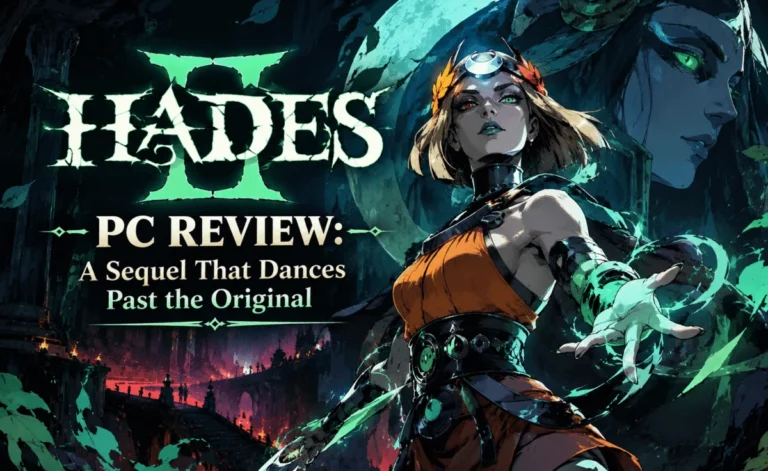

A game used to reach its audience through a handful of magazines and a television ad. Today it travels through press kits, creator codes, clips, communities, and algorithms. This briefing explores how modern game coverage actually works, and what it means for the way you discover and judge new releases.
Briefing Highlights
- The press kit is now a toolkit for creators and communities, not just journalists.
- Three audiences, press, creators, and community, each require different materials and different trust.
- Short-form video has changed what a “first impression” of a game looks like.
- Savvy players can learn to separate organic buzz from orchestrated campaigns.
1. The Press Kit Grows Up
Traditionally, a press kit was a folder, physical or digital, containing a fact sheet, a handful of screenshots, a logo, and a short description of a game. It existed to make a journalist’s job easier by providing accurate, pre-approved materials. That purpose has not disappeared, but the kit has expanded in scope. It now serves a much wider audience and must meet much higher expectations.
A modern press kit often includes high-resolution art, trailer files with and without text overlays, logos in multiple formats, background information on the studio, developer biographies, key facts, and sometimes sample interview questions. Many studios also provide guidance on how their game should be described, including name spelling, platform details, and any sensitive points. The aim is to reduce errors and give writers and creators the tools to represent the game accurately.
For players, the quality of a press kit is an indirect but meaningful indicator of a studio’s professionalism. A well-organized kit suggests a team that values clarity and respects the time of those who cover its work. A confusing or incomplete kit may reflect limited resources, which is understandable for small teams, but it is useful context when you notice inconsistencies in coverage.
2. Three Audiences, Three Strategies
Studios no longer address a single press audience. Instead, they communicate with three overlapping groups, and each requires a distinct approach.
Journalists and critics who provide analysis, reporting, and reviews. They value accuracy, access, and independence, and they need time and context to do their work well.
Streamers, video makers, and personalities who show games in action. They value playable builds, authenticity, and creative freedom, and they bring their own communities.
Players, fans, and modders who discuss and share. They value responsiveness, honesty, and a sense of belonging, and they often shape a game’s reputation more than either of the other groups.
The three groups influence one another. A journalist’s review may be discussed by creators, who in turn shape opinions within communities. A viral clip from a creator may send players to read a detailed analysis. A community controversy may be picked up by the press. Studios therefore think of coverage as an ecosystem, rather than a pipeline.
Working With the Press
Traditional outlets still provide something valuable that other channels often cannot: sustained, independent evaluation. A review written after many hours of play, with attention to design, performance, and context, remains a unique form of coverage. Studios support this work by providing early access, answering questions, and respecting editorial independence. The best relationships are built on mutual respect: the studio does not attempt to control the verdict, and the outlet does not treat access as a favor requiring return.
Working With Creators
Creators offer something different: the experience of watching a game in motion, with human reaction attached. A great clip can communicate a game’s appeal in seconds. Studios therefore provide creators with early builds, tools, and sometimes the opportunity to speak with developers. The more thoughtful teams also ensure that sponsored content is clearly disclosed, since audiences rely on that transparency to judge the authenticity of what they see.
Working With Communities
Community engagement happens in the open: on forums, chat servers, and social platforms. Here the studio is not distributing materials but participating in conversations. The most effective teams answer questions, share work in progress, and listen to feedback. They understand that a community is not an audience to be managed, but a group of people with a stake in the game’s success.
“Coverage is no longer something studios receive. It is something they take part in.”
— The Depplo Team
3. The Short-Form Revolution
Perhaps the most significant change in how games are covered is the rise of short-form video. A clip of fifteen to sixty seconds can reach millions of people, and a single moment of surprising gameplay can transform a modest release into a topic of widespread conversation. This has altered what studios prioritize in their marketing.
Where trailers once focused on narrative and atmosphere, many now incorporate “clippable” moments: sequences designed to be understood instantly, without sound or context. Game design itself is sometimes influenced by this dynamic, with developers noticing which interactions produce the most shareable results. This does not mean that games are becoming shallow, but it does mean that the first impression many players have is a brief, highly selective glimpse.
The implication for viewers is that a short clip is a highlight, not a representation. It shows the most striking possible moment, which may be rare in actual play. A thoughtful viewer treats short-form content as an invitation to learn more rather than a complete picture, and seeks out longer sources before forming an opinion.
4. How a Coverage Campaign Unfolds
To make this concrete, consider how a typical coverage campaign might unfold for a mid-sized release. This is a composite and not a description of any specific title, but it reflects common practice.
| Timeline | Activity | Who It Reaches |
|---|---|---|
| Months before | Announcement, first trailer, store page opens, press kit distributed. | Press and community. |
| 6 to 8 weeks before | Hands-on previews for selected journalists and creators; demo or beta may open. | Press, creators, early adopters. |
| 2 to 4 weeks before | Preview embargo lifts; developer interviews and deep dives published. | All three audiences. |
| Launch week | Review embargo lifts; creator streams and clips surge; community discussion peaks. | Broad public. |
| Weeks after | Patch notes, community responses, retrospectives, and roadmap announcements. | Community and returning players. |
Notice that the three audiences are engaged at different times and in different ways. The press typically receives information first, since its work requires preparation. Creators arrive in the middle of the campaign, when interest is building. The community is present throughout but becomes the dominant voice after release. A studio that understands this sequence can allocate its resources and attention sensibly.
5. Organic Buzz Versus Orchestrated Campaigns
Because coverage is so influential, it is natural to wonder how much of it is organic and how much is engineered. The truth is that the two are intertwined. Even the most spontaneous-seeming moment may be the result of preparation, and even the most carefully planned campaign depends on genuine reactions to succeed. The practical question for players is not whether marketing exists, but whether it is honest.
There are a few indicators that can help. Disclosure is the most important: reputable creators and outlets state when content is sponsored or when they received a product or access. Variety is another: a healthy range of opinions, including critical ones, suggests that coverage has not been uniformly shaped. Specificity is a third: authentic enthusiasm usually includes concrete details, while orchestrated enthusiasm tends toward generalities.
Conversely, be cautious when you notice a sudden surge of near-identical messaging, unusually uniform praise, or an absence of any critique. These patterns do not prove anything, but they are worth noticing. The remedy is simple: consult several sources, including some that have no relationship with the studio, and give extra weight to coverage that explains its reasoning.
Depplo’s Three-Source Habit
Before you decide about a new release, look at three different kinds of source: one analytical piece from a critic or journalist, one extended look at gameplay from a creator, and one set of discussions from ordinary players. Where the three agree, you can be fairly confident. Where they disagree, you have found the questions worth investigating.
6. Accessibility, Inclusion, and Better Press Materials
One encouraging trend in press communication is the growing attention to accessibility. Studios increasingly publish information about accessibility options alongside the usual feature lists, such as control remapping, subtitle customization, colorblind modes, and difficulty settings. This information is valuable to players who need to know, before purchasing, whether a game will work for them.
The same principle applies to the materials themselves. Trailers with captions, press kits with descriptive alt text for images, and websites that follow accessibility standards extend the reach of coverage and signal respect for a diverse audience. They also make the work of writers and creators easier, since well-described assets are easier to use.
If you are a player who relies on accessibility features, it is worth checking whether a studio publishes details about them early. A studio that talks about accessibility openly is often one that has considered it throughout development, rather than as an afterthought.
7. Smaller Studios and the Level Playing Field
The changes in coverage have not only benefited large publishers. They have also created new opportunities for small and independent teams. A compelling clip, a heartfelt developer post, or an enthusiastic community can bring attention that once required a substantial marketing budget. Digital storefronts, social platforms, and creator ecosystems provide channels through which a game made by a handful of people can find a global audience.
That said, the abundance of options also creates a challenge. With so many games competing for attention, visibility is difficult to achieve and harder to sustain. Small studios often need to be especially thoughtful about their press materials, choosing a clear message, a distinctive visual identity, and a handful of channels where they can be consistently active. Quality of communication can partly compensate for a lack of scale.
For players, this is a reason to look beyond the most visible titles. Many of the most inventive and memorable games come from small teams whose coverage is modest. A little curiosity, and a willingness to explore the less-trodden paths of the store and the community, can lead to rewarding discoveries.
8. What to Expect Next
Looking forward, we expect press communication to continue moving toward greater interactivity and personalization. Playable demos, interactive press kits, and live developer sessions are already becoming more common. Communities are increasingly involved in testing and feedback long before launch. And the line between marketing and conversation continues to blur, as studios use the same channels to promote, support, and listen.
These trends bring both benefits and responsibilities. For studios, they offer richer ways to connect, along with a heightened expectation of honesty and responsiveness. For players and writers, they provide more access, along with a need for discernment. For everyone involved, they underscore the value of clear, truthful communication, delivered with respect for the people on the other side.
Final Thoughts
Game coverage has become a layered, collaborative, and fast-moving ecosystem. The press kit that once sat in a journalist’s inbox is now the starting point for a web of conversations that stretches across video, text, and live community interaction. Understanding how that web works makes you a better-informed player, a more careful reader, and a more thoughtful participant in the community.
Depplo will keep following this landscape, bringing you press updates with context and an eye for what lies beneath the surface. The next time a game catches your attention, try the three-source habit, notice the disclosures, and enjoy the discovery. After all, the best part of the process is still the one that happens when you finally press play.
Published by the Depplo Team · depplo.com/ · Category: Game Press Updates
About the Author