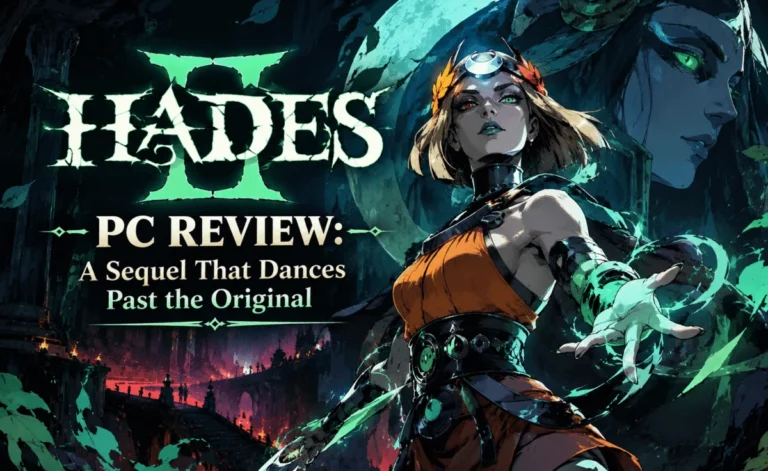

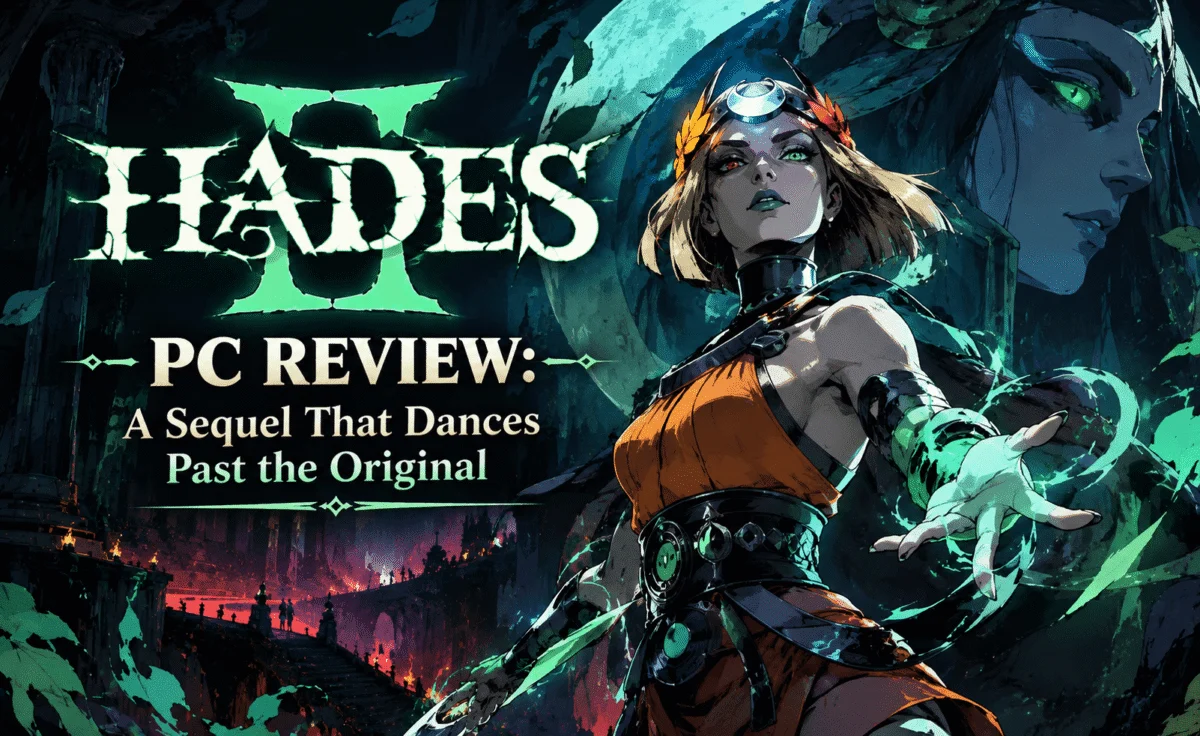
Following up a game as beloved as Hades is the kind of challenge that makes lesser studios flinch. The original won hearts by being fast, stylish, generous, and wickedly well written, and it set a standard for the roguelike genre that still looms over everything that came after. Supergiant Games did not flinch. Hades II takes everything that made its predecessor magnetic, sharpens it, and then points it toward the sky, in a sequel that is as bold as it is polished.
A New Heroine, A New Kind of Escape
The first game was about a prince trying to flee the Underworld. The sequel flips the premise. You play as Melinoë, a young witch trained in the arts of magic and combat, who is determined to fight her way through hostile realms and confront the ancient Titan of Time. The shift in tone is immediate. Where the original was about rebellion against a family, this one is about duty, legacy, and the weight of a mission that began long before you were born.
Melinoë is a wonderful protagonist. She is capable, curious, and quietly funny, and her relationships with the residents of the Crossroads, the game’s central hub, form the emotional core of the experience. The writing is warm and witty, and the voice cast brings a lived-in quality to every conversation. Characters have their own concerns, their own histories, and their own reactions to your successes and failures. The more you play, the more the hub feels like a community that you are slowly becoming part of.
Returning fans will find plenty of familiar faces and plenty of surprises. The mythological setting is richer than before, drawing on a deeper well of Greek legend and giving the studio room to explore stories that the first game only hinted at. Even if you have never played the original, the sequel stands on its own, though you will gain extra resonance from the references and callbacks.
“This is a sequel that understands what to keep, what to change, and when to trust its audience.”
Combat That Feels Like Dancing
The moment-to-moment combat is where Hades II truly shines. Melinoë has a set of core abilities: a primary attack, a special, a dash, a cast, and a magical ability called Omega moves that charge for extra power. Combine these with a rotating cast of weapons, each of which has its own rhythm and aspects, and you have a system with an astonishing amount of variety.
Weapons are not simply different sticks to hit things with. Each one changes how you move through a fight. Some reward close-range aggression, others reward careful spacing, and others reward clever use of area control. Aspects, which are alternate versions of each weapon, change their behavior in ways that can fundamentally reshape your approach. A weapon you ignored in the early hours can become a favorite once you discover the right aspect.
The magic system adds another layer. Spells, rituals, and boons from the gods combine in ways that create real builds, and the sense of discovering a powerful synergy is one of the great joys of the genre. A particularly satisfying run, in which multiple blessings snowball into an unstoppable cascade, is as thrilling as any boss fight. And when a run goes wrong, the game is generous enough to make failure feel like progress.
The dash, as ever, is the secret ingredient. It is quick, responsive, and satisfying, and it makes every encounter feel like a dance. The enemy designs support this: attack telegraphs are readable, patterns are learnable, and the game constantly encourages you to move rather than stand still. When it all clicks, it feels like conducting an orchestra of violence.
Two Paths, Two Moods
One of the sequel’s most welcome changes is how it structures its journeys. Rather than a single descent through a single underworld, you travel through different regions and routes, each with its own enemies, hazards, and atmosphere. This gives the game a sense of scale that the original, great as it was, could not quite match.
The variety is not just visual. Different regions require different tactics, and the shifting environments keep runs feeling fresh long after you have memorized the basics. Enemies behave differently, hazards demand different responses, and bosses are tailored to their settings. It is a design choice that respects your time and your intelligence, and it keeps the loop engaging across dozens of hours.
The bosses themselves are excellent. They are dramatic, readable, and varied, and several have mechanics that force you to rethink your build mid-fight. The visual spectacle is considerable, and the music is the kind that makes you want to replay a fight simply to hear it again. Some of the later encounters are legitimately tough, but they are fair, and defeating them is deeply satisfying.
Progression, Crafting, and the Joy of Tinkering
Between runs, you return to the Crossroads to spend resources, upgrade your abilities, and prepare for the next attempt. The progression systems are deeper than in the first game, with more ways to customize your approach and more reasons to gather the materials scattered across the world. Gathering, fishing, and other light activities add a gentle counterpoint to the intensity of combat, giving you something calm to do when you need a break from the fighting.
This might sound like a distraction, but it works. The gathering systems feed directly into your progress, and the quiet moments help the world feel like a living place rather than a series of arenas. They also give the game a rhythm: intense bursts of action followed by moments of reflection, which keeps the experience from feeling exhausting.
The long-term progression is generous without being patronizing. If a run goes badly, you almost always come away with something useful, whether a resource, a story beat, or a new idea about how to build your character. That sense of constant forward motion is a hallmark of Supergiant’s design philosophy, and it is executed beautifully here.
“Every failed run feels like a lesson, and every lesson feels like a gift.”
Art, Music, and Atmosphere
Visually, Hades II is a feast. The hand-painted art style is richer and more detailed than its predecessor, with lush environments, expressive character designs, and spell effects that fill the screen with color without ever obscuring the action. The camera is carefully tuned, and the lighting gives each region a distinct identity.
The score is another triumph. Blending ancient-sounding instrumentation with modern production, the soundtrack adds emotional weight to every scene. Boss themes are dramatic and memorable, ambient tracks are haunting, and the vocal pieces are among the most affecting in recent gaming. The voice acting is equally strong, and the dialogue is delivered with a naturalism that elevates the writing.
It is rare for a game to be this cohesive. The art, music, writing, and mechanics all feel like they were designed by people who talk to each other, and the result is an experience with a very clear identity. You always know you are playing a Supergiant game, and that confidence is deeply reassuring.
On PC: Lean, Fast, and Friendly
Hades II is a well-optimized game, and it runs well on a wide range of PC hardware. Load times are short, input response is crisp, and the options menu offers a sensible set of settings. It is a good fit for handheld PCs as well as desktops, thanks to its readable interface and clear visuals. Controller support is excellent, which is no surprise for a game built around fast, precise movement, though keyboard and mouse remain a viable option.
Accessibility options are thoughtful, with settings that let players adjust difficulty to suit their needs. These options do not compromise the experience; they simply widen the audience, and that is something every developer should aspire to. Whatever your skill level, there is a way to enjoy the game.
Who Should Play It
If you enjoyed the original, this is a no-brainer. If you are new to the genre, this is one of the best possible starting points, thanks to its generosity, charm, and approachable difficulty options. If you dislike repetition, be aware that the roguelike structure means you will see the same regions many times, though the variety of builds and the steady unfolding of the story keep the loop engaging. Players who want a single, linear narrative may find the structure less satisfying, but those who enjoy discovering a story piece by piece will be delighted.
Tips for Your First Few Runs
If you are new to the series, the most important lesson is to treat early failures as an investment. Spend your resources at the Crossroads between attempts, try every weapon at least once, and pay attention to which boons pair naturally with your favorite abilities. Do not be afraid to experiment with unusual combinations; some of the most memorable runs come from builds that sound ridiculous on paper.
Learn the dash first. Everything else in the game, from dodging telegraphed attacks to positioning for a powerful cast, flows from good movement. Take note of enemy patterns rather than rushing through encounters, and use the quieter moments in the hub to talk to everyone, since conversations unlock story and sometimes useful rewards. If a particular fight is giving you trouble, the accessibility options are there to help, and there is no shame in using them.
Above all, enjoy the rhythm. The game is designed to be replayed, and the more relaxed you are about each attempt, the more it opens up. Some of the best moments happen when you stop worrying about winning and simply let the music carry you through the fight.
The Depplo Verdict
Hades II is a rare sequel that justifies its existence. It refines the formula, deepens the world, and expands the ambition without losing the charm that made the original special. Its combat is fluid and expressive, its writing is warm and sharp, and its presentation is among the best in the genre.
It is not a game that reinvents the wheel, but it is a game that makes the wheel spin more beautifully than ever. For PC players looking for something fast, stylish, and endlessly replayable, this is an easy recommendation. Grab your weapon, steady your nerves, and prepare to fall in love all over again.
Score Breakdown
- Fluid, expressive combat
- Warm, witty writing and a lovely hub
- Huge build variety across weapons and boons
- Excellent performance and controller support
- Roguelike repetition is unavoidable
- Story arrives in fragments
- Late-game fights can be tough
Reviewed by the Depplo Team. Scores reflect our editorial opinion. Browse more in Game Verdicts → PC Games.
About the Author